


Can You Mix Creatine With Protein or Coffee?
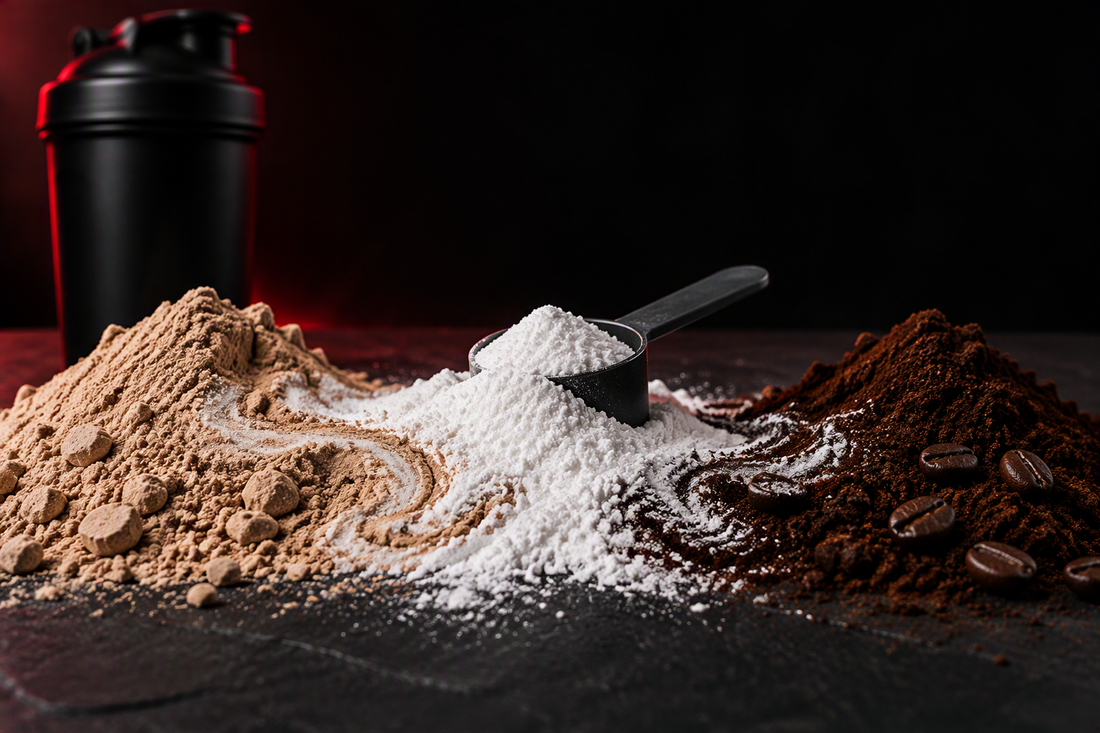
By Romain Maennel, Engineering Degree (Agronomy and Food Science) · Published 5 November 2026 · 8 min read
Quick answer: Healthy adults can generally take creatine monohydrate mixed with a protein shake, coffee, juice or another drink or soft food that is consumed soon after preparation. Your choice mainly affects convenience, taste and nutrition. Coffee doesn't appear to stop creatine getting into your muscles. But research on how caffeine and creatine together affect performance is mixed. 1,4
Introduction to choosing what to mix creatine with
If one supplement sits beside the coffee machine and another is in the gym bag, you might wonder whether they can share the same drink. Usually they can. The mix should suit your routine, your nutrition targets and what you tolerate.
Creatine isn't a protein. It's a nitrogen-containing compound stored mostly in your muscles. There, creatine and phosphocreatine support quick energy production during short, high-intensity activity. Protein supplies amino acids that your body uses everywhere, including to build muscle protein. They have different jobs, so taking them together doesn't make either one pointless. 1
Below, we compare protein, coffee, juice, milk and food as things to mix creatine with. We also look at when an all-in-one protein-and-creatine powder may be more convenient than buying separate products.
Can you mix creatine with protein powder?
Yes. You can add creatine monohydrate to a protein shake, as long as you follow the directions on both product labels. Mixing them is about convenience. Creatine doesn't have to be mixed with protein to work.
In one study of 12 men, a drink with about 50 g of protein and 47 g of carbohydrate increased whole-body creatine retention. That means how much creatine the body holds on to. The increase was similar to a drink with almost 100 g of carbohydrate. Both were compared with a low-carbohydrate drink during a short creatine-loading phase. 2
This was a short-term creatine-loading study, and creatine retention was the measured outcome. It used set amounts of protein, carbohydrate and creatine under controlled conditions. The results do not show that an everyday protein shake improves long-term creatine effectiveness or exercise performance. You shouldn't assume a lower-carb shake or a different serve size will have the same effect. Our guide on how to take creatine explains loading and daily use.
Is creatine a protein?
No. Creatine and protein are different, both chemically and nutritionally. Your body makes creatine from amino acids and stores it mainly in muscle, but creatine itself isn't a protein. Protein in food is made of chains of amino acids. Your body uses it in many ways, including for building tissue and for metabolism. 1 Our guide to what creatine is and how it works explains more.
A protein powder with added creatine gives you both. A creatine-only powder doesn't replace the protein in your diet. And you shouldn't assume a regular protein powder contains creatine unless the label lists it.
All-in-one protein and creatine versus separate products
An all-in-one product gives you a set amount of protein and creatine in each serve. Separate products let you change the amount and timing of each one separately. Neither option is automatically better for everyone.
| Decision point | All-in-one protein + creatine | Separate protein and creatine |
|---|---|---|
| Routine | One product and one mixing step | Two products to measure or use at different times |
| Dose flexibility | Fixed ratio per labelled serve | Each product can be adjusted within its own label directions |
| Tracking | Simple when the same serve is used consistently | Easier to separate creatine intake from protein-shake frequency |
| Food fit | Useful when a shake already suits the day | Useful when protein needs are met through food |
| Buying decision | Compare protein source, creatine amount, allergens and serve size together | Compare each product on its own label and purpose |
A combined format may suit you if you already want a regular protein shake and like fewer steps. Separate products may suit you better if you don’t have protein every day, change your protein serve size, or want to take creatine without a shake.
Can you put creatine in coffee?
Creatine can be mixed into coffee and consumed soon after preparation. Current evidence does not support the broad claim that caffeine makes creatine ineffective. However, research on the performance effects of taking caffeine and creatine together is mixed, and the available studies used varying doses and supplementation protocols that may not reflect an ordinary cup of coffee. 3,4,5
A 2023 systematic review looked at ten studies. When people took a single dose of caffeine after a creatine-loading phase, three of five studies found an extra effect on performance compared with creatine alone. When people had caffeine every day during loading, only one of five studies found an extra benefit. The review concluded that taking caffeine throughout a loading phase had no apparent performance benefit. 3
A six-week randomised trial gave 28 trained young adults creatine and caffeine, separately or together, during resistance training. It found no differences between the groups for most of the things it measured. The creatine-only group showed a small increase in knee-extensor muscle thickness (the muscles at the front of the thigh), but the combined group did not. 4
So these findings don't show that a normal cup of coffee destroys creatine. They also don't support a promise that the combination always makes no difference, or is always better.
Practical points for creatine in coffee
- Follow the directions on the product label.
- Stir it well and drink it straight away. Don't make it up to keep for later.
- Keep in mind how well you handle caffeine, and your total caffeine intake from all sources.
- If the mix gives you stomach discomfort, take them separately and change one thing at a time.
- Always follow any warnings and directions on both the creatine product and the caffeine-containing product.
Can you mix creatine with juice, milk or food?
Creatine monohydrate can be mixed with several everyday drinks and foods. Pick one that fits the label, that you'll finish every time and that suits the rest of your diet.
Mixing creatine with juice
Juice can make unflavoured creatine easier to drink, and it gives you carbohydrate. Controlled studies found that more creatine was taken up or held on to when people had large amounts of carbohydrate with it during short loading phases. In one five-day study of 24 men, total muscle creatine rose more with creatine plus lots of carbohydrate than with creatine alone. 6
That doesn't mean you need a sugary drink for everyday creatine use. The studies used large amounts of carbohydrate. The findings shouldn't be turned into a rule for everyone to add extra sugar. Think about your total energy intake, your teeth and your own nutrition goals.
Mixing creatine with milk
Creatine monohydrate can be stirred into milk as a practical way to consume it. Milk also contributes protein, carbohydrate and energy, so consider whether it fits your nutrition needs. People with a milk allergy should avoid dairy milk, while those with lactose intolerance should choose an option they tolerate.
Mixing creatine with yoghurt, oats or other food
Creatine can be stirred into yoghurt, oats or another soft food shortly before eating. Mix it through thoroughly and consume the full portion to obtain the intended serve. As stability varies with moisture, acidity, temperature and holding time, avoid preparing the creatine-containing food well in advance unless the product directions specifically support this.
Does the liquid temperature matter?
Creatine monohydrate generally dissolves more readily in warmer liquid than in cold liquid. Undissolved particles do not necessarily mean the creatine is ineffective, but they may remain in the container, so stir or shake again and consume the full drink. Once mixed into liquid, consume it promptly rather than storing it for later, particularly in warm or acidic drinks.

Which Musashi format fits your routine?
Musashi makes two combined formats. Musashi High Protein + Creatine comes in Chocolate and Vanilla (900 g), with 30 g of protein and 3 g of creatine monohydrate per serve. Musashi 100% Whey + Creatine comes in Chocolate and Vanilla (900 g, plus 2 kg in Australia). It has 24 g of protein (25 g in Vanilla) and 3 g of creatine monohydrate per serve. 7,8
Musashi Creatine Monohydrate Powder is a Fuel-system powder made with creatine monohydrate. It comes in Unflavoured (350 g and 600 g), Berry (420 g) and Blue Raspberry (420 g), with 5 g of creatine monohydrate per serve.
| If your priority is... | Format to review | Why it may fit |
|---|---|---|
| A combined, higher-protein serve | Musashi High Protein + Creatine | 30 g protein and 3 g creatine per serve |
| A whey-focused combined product | Musashi 100% Whey + Creatine | A blend of whey protein concentrate and whey protein isolate, with added creatine |
| Maximum flexibility | Separate Musashi protein and Creatine Monohydrate Powder | Protein and creatine can be used independently according to each label |
Key takeaways about mixing creatine
- Creatine can be mixed with protein shakes, coffee, juice, milk or soft foods.
- Creatine isn't a protein, and the two ingredients have different roles.
- Caffeine does not simply cancel creatine, but combined performance evidence is mixed.
- All-in-one products focus on convenience. Separate products give you more flexibility with each serve.
- Have mixed creatine soon after you make it.
Frequently asked questions about mixing creatine
Can you mix creatine with protein powder?
Creatine monohydrate can be added to a protein shake, as long as you use both products the way their labels say. Research using specific protein-and-carbohydrate combinations found the body held on to more creatine during a short loading phase. But that doesn't prove every shake improves creatine uptake or performance. 2
Is creatine a protein?
Creatine isn't a protein. It's a compound stored mostly in your muscles, where it's involved in quick energy production. Protein is made of chains of amino acids and does different jobs in the body. A creatine supplement doesn't replace the protein in your diet. And you shouldn't assume an ordinary protein powder contains creatine. 1
Can you put creatine in coffee?
Creatine can be stirred into coffee and consumed soon after preparation. Current evidence does not show that caffeine automatically makes creatine ineffective, but findings on the performance effects of using caffeine and creatine together remain mixed. Consider your total caffeine intake, individual tolerance and the directions on the creatine product. 3,4
Can you mix creatine with juice or milk?
Juice or milk can be a practical way to take creatine, as long as it fits your diet and the product directions. In controlled loading studies, high-carbohydrate drinks increased creatine retention. But the amounts of carbohydrate tested were large. You don't automatically need extra sugar for everyday creatine use. 2,6
Is an all-in-one protein and creatine powder better than separate products?
An all-in-one protein and creatine powder isn't necessarily better than separate products. It can make a regular shake routine simpler. Separate products let you choose the serve and timing of each one on its own. Compare the label's protein source, creatine amount, allergens, serve size and directions. Then choose the format that best fits consistent use and your nutrition needs.
References
- Kreider, R. B., Kalman, D. S., Antonio, J., et al. (2017). International Society of Sports Nutrition position stand: Safety and efficacy of creatine supplementation in exercise, sport, and medicine. Journal of the International Society of Sports Nutrition, 14, 18. DOI record
- Steenge, G. R., Simpson, E. J., & Greenhaff, P. L. (2000). Protein- and carbohydrate-induced augmentation of whole body creatine retention in humans. Journal of Applied Physiology, 89(3), 1165–1171. DOI record
- Marinho, A. H., Gonçalves, J. S., Araújo, P. K., Lima-Silva, A. E., Ataide-Silva, T., & de Araujo, G. G. (2023). Effects of creatine and caffeine ingestion in combination on exercise performance: A systematic review. Critical Reviews in Food Science and Nutrition, 63(20), 4785–4798. DOI record
- Pakulak, A., Candow, D. G., Totosy de Zepetnek, J., Forbes, S. C., & Basta, D. (2022). Effects of creatine and caffeine supplementation during resistance training on body composition, strength, endurance, rating of perceived exertion and fatigue in trained young adults. Journal of Dietary Supplements, 19(5), 587–602. DOI record
- Trexler, E. T., & Smith-Ryan, A. E. (2015). Creatine and caffeine: Considerations for concurrent supplementation. International Journal of Sport Nutrition and Exercise Metabolism, 25(6), 607–623. DOI record
- Green, A. L., Hultman, E., Macdonald, I. A., Sewell, D. A., & Greenhaff, P. L. (1996). Carbohydrate ingestion augments skeletal muscle creatine accumulation during creatine supplementation in humans. American Journal of Physiology-Endocrinology and Metabolism, 271(5), E821–E826. DOI record
- Musashi. (2026). High Protein + Creatine Powder. Musashi Australia. Musashi product page
- Musashi. (2026). 100% Whey + Creatine. Musashi Australia. Musashi product page
The information in this article is for educational purposes only and is not intended as medical advice. Always read the label and follow the directions for use. If symptoms persist, consult your healthcare professional. Musashi products are formulated for healthy adults; consult a healthcare professional before use if you have a pre-existing medical condition, are pregnant or breastfeeding, or are taking medication.


